
Buying commercial property through your self managed super fund can be a smart way to build retirement wealth, especially if your own business ends up paying rent to your fund instead of to a landlord. It only works well, though, if the purchase satisfies strict ATO rules around arm’s length dealing, the sole purpose test, and how the debt is structured.
I’m Durand, and I work with business owners and professionals across Melbourne who want to use their SMSF to hold commercial property with confidence. Here are the seven things I always work through with clients before they sign anything.
1. Is the property an arm’s length investment?
Every transaction your SMSF enters into must be conducted on a commercial, arm’s length basis. If you’re buying a property that your own business will occupy, your SMSF has to lease it to your business at market rent and on standard commercial terms, the same as it would to any unrelated tenant.
This matters because the ATO looks closely at related party dealings inside an SMSF. Getting an independent market rent appraisal and putting a proper commercial lease in place protects both your fund’s compliance and your own position.
2. Do you meet the sole purpose test?
Every asset your SMSF holds, including commercial property, must be there to provide retirement benefits for fund members, and for no other reason. You can’t use the property personally, and related parties can only use it if they’re paying full commercial rent and the use is genuinely business related.
Falling foul of the sole purpose test is one of the more serious compliance breaches an SMSF can make, and it can result in penalties or disqualification of the fund. It’s worth getting this right from day one rather than trying to fix it later.
3. How will you fund the purchase?
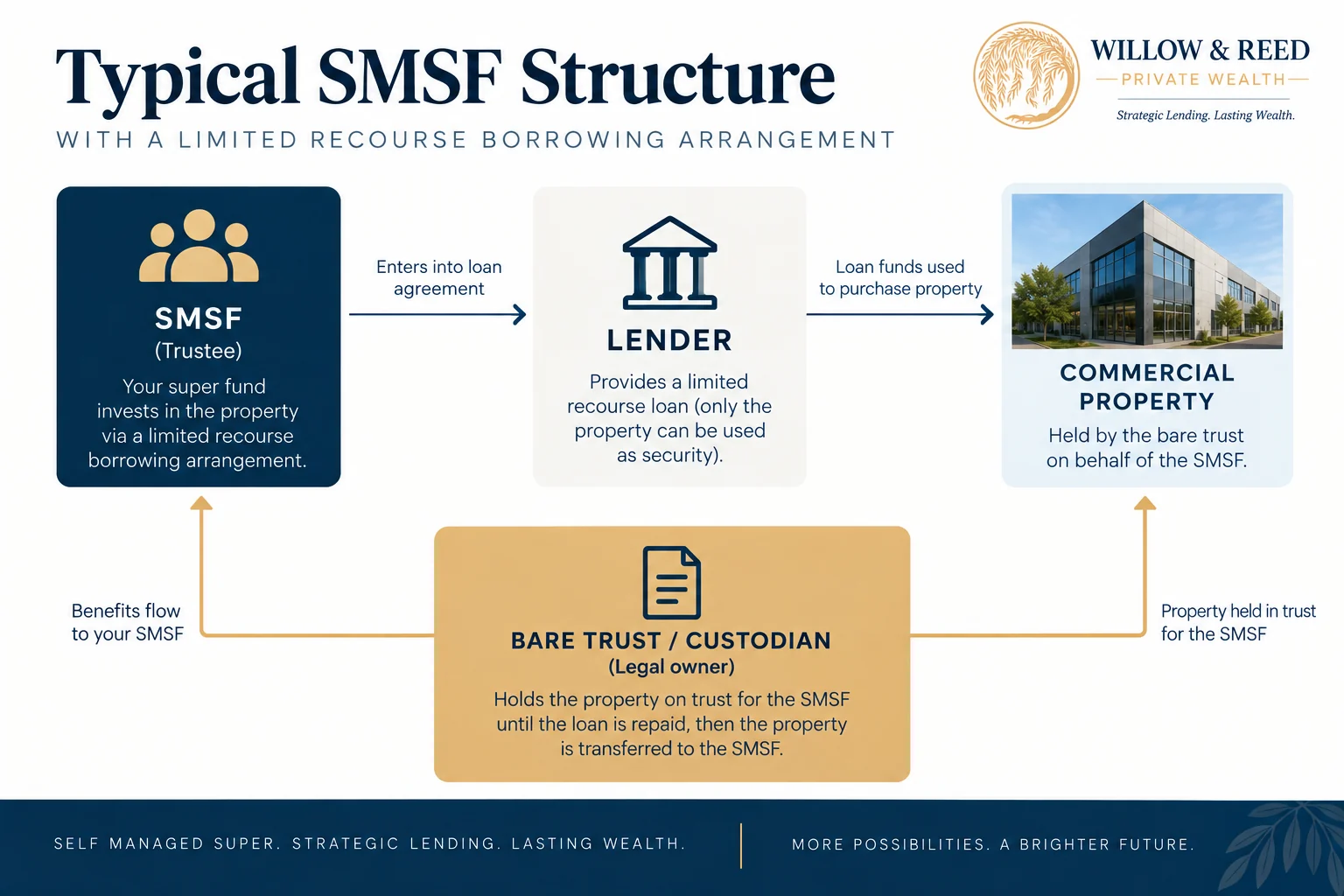
Your SMSF can buy commercial property outright using existing fund balances, or borrow through a limited recourse borrowing arrangement, generally known as an LRBA. Under an LRBA, the property is held in a separate trust until the loan is repaid, and the lender’s recourse is limited to that specific asset rather than the rest of your fund.
Lenders assess SMSF borrowing differently to a standard home loan. Deposit requirements are typically higher than for a personal property purchase, and your fund’s cash flow, including expected rental income and existing contributions, needs to comfortably support the loan repayments. This is an area where getting broker advice early avoids wasted time on a property your fund can’t actually finance.
4. Is the property a sound investment in its own right?
The tax advantages of owning property inside an SMSF are real, but they shouldn’t be the only reason you buy. The property still needs to stand up as a good investment on its own merits.
Look closely at location, tenant demand, the strength and length of the lease, outgoings, and the property’s long-term growth potential. The purchase also needs to fit your fund’s documented investment strategy, including how it affects the fund’s overall diversification and liquidity.
Commercial property versus residential property inside an SMSF
One reason commercial property is such a popular SMSF strategy for business owners is a rule that doesn’t apply to residential property. Your SMSF can lease a commercial property, known as business real property, to your own related business, provided the lease is on strict commercial terms. Residential property inside an SMSF cannot be leased to you, your family, or any related party under any circumstances, which is why business owners in particular tend to look at commercial rather than residential property when using their fund to invest directly in real estate.
This distinction is worth understanding early, since it often explains why an SMSF commercial property strategy makes sense for a business owner but wouldn’t work at all for buying a holiday house or a rental for a family member.
5. What are the tax implications?
Income and capital gains earned inside an SMSF are taxed at concessional rates, generally 15% while the fund is in accumulation phase, and potentially 0% once the fund moves into pension phase. That’s a significant advantage over holding the same property personally or through a company.
That said, GST and stamp duty can still apply to the purchase itself, and the rules around these vary depending on how the property is used and structured. Getting the transaction structured correctly from the outset is important for making the most of the available tax efficiency.
6. How will ongoing costs be managed?
Rates, insurance, maintenance, repairs and loan repayments all need to be paid from the SMSF, not from your personal or business accounts. This can put pressure on the fund’s liquidity, particularly if rental income is interrupted by a vacancy or a tenant default.
Before you buy, it’s worth stress testing the fund’s cash flow. What happens if the property sits vacant for a few months? Does the fund have enough liquidity to cover loan repayments and expenses without forcing a sale of other assets at the wrong time?
7. Do you have the right professional team around you?
Buying commercial property through an SMSF properly involves your mortgage broker, accountant, financial adviser and solicitor working together, not in isolation. A misstep in any one area, from the loan structure to the lease terms, can create a compliance breach or simply a worse financial outcome than you should have had.
I coordinate closely with clients’ accountants and advisers on SMSF purchases specifically because the pieces need to fit together. If you don’t already have this team in place, that’s a good first conversation to have before you start looking at properties.
Final thoughts
Owning commercial property through your SMSF can be a genuinely powerful way to build retirement wealth, particularly for business owners who would otherwise be paying rent to someone else. It isn’t a decision to rush, though. Getting the arm’s length dealing, the sole purpose test, the funding structure and the tax position right from the start makes the difference between a great outcome and an expensive compliance headache.
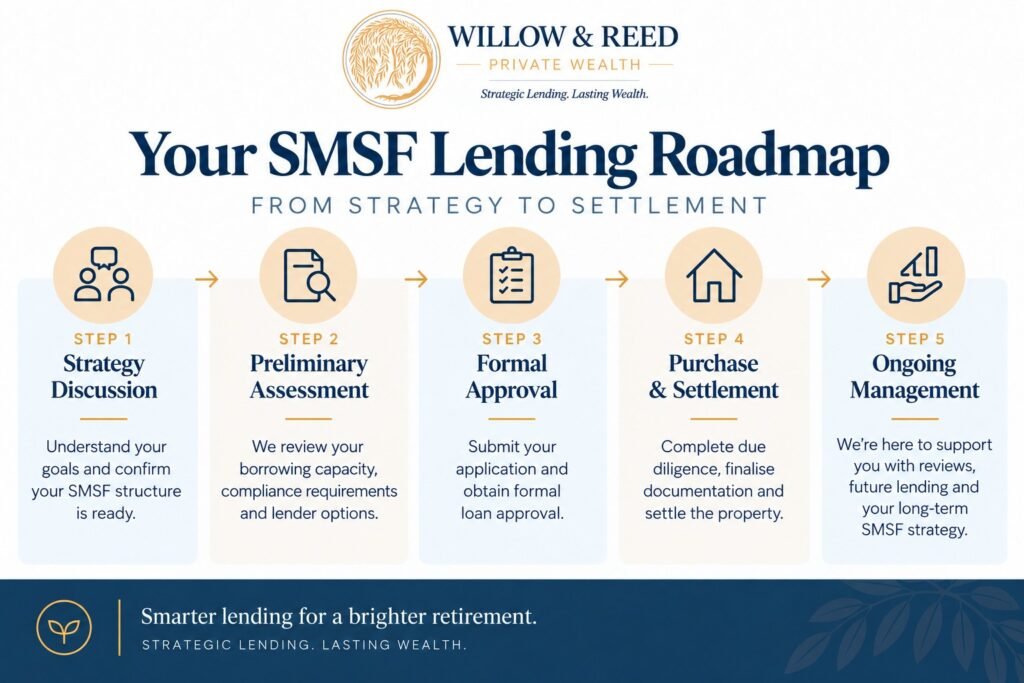
If you’d like tailored advice on SMSF lending or want to understand your fund’s borrowing capacity, I’m happy to help. If you haven’t mapped out your SMSF strategy yet, our SMSF lending roadmap is a useful starting point, and our guide to investing in commercial property covers the basics if you’re new to this asset class.
Frequently asked questions
Can my business pay rent to my own SMSF?
Yes, provided the lease is on commercial, arm’s length terms and the rent reflects genuine market rates. This is a common and legitimate strategy, but it must be documented and priced correctly to satisfy ATO requirements.
What is the sole purpose test for SMSF property?
It’s the requirement that every asset your SMSF holds, including commercial property, exists solely to provide retirement benefits for fund members. Personal or unrelated use of the property can breach this test and put the fund’s compliance at risk.
What is a limited recourse borrowing arrangement (LRBA)?
An LRBA is the structure SMSFs use to borrow for property. The property is held in a separate trust until the loan is repaid, and the lender’s recourse is limited to that asset rather than the rest of the fund’s assets.
How much deposit does an SMSF need for a commercial property purchase?
Deposit requirements for SMSF commercial lending are typically higher than for a standard home loan and vary between lenders, so it’s worth getting your fund’s borrowing capacity assessed before you start looking at properties.
What tax rate applies to rental income earned inside an SMSF?
Rental income and capital gains inside an SMSF are generally taxed at 15% during the accumulation phase, and can be taxed at 0% once the fund is in pension phase.