
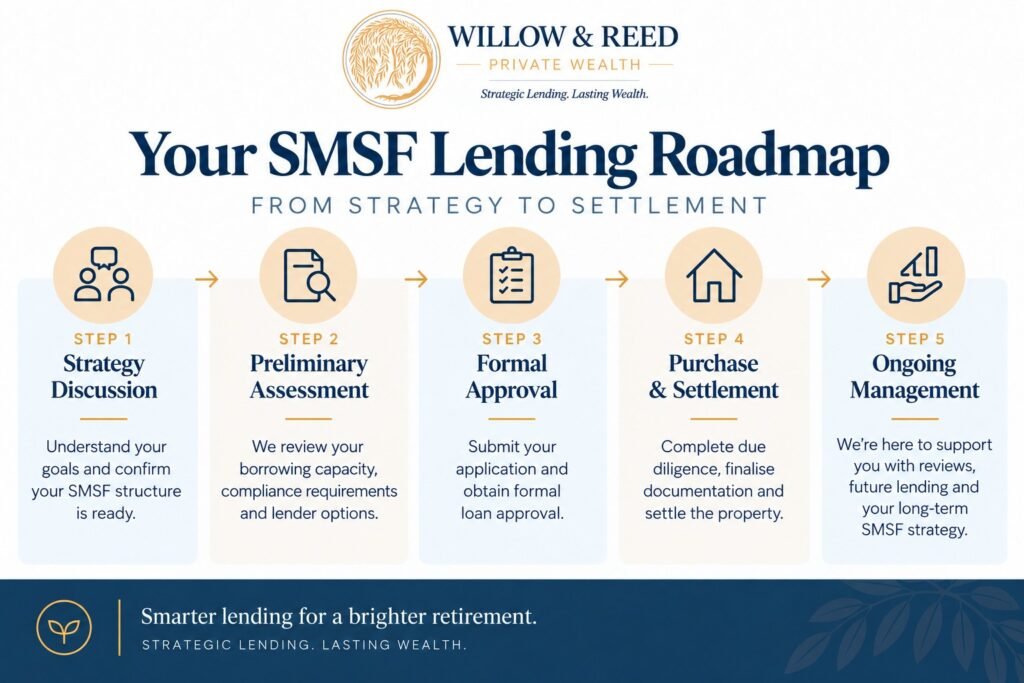
An SMSF loan lets your self-managed super fund borrow to buy an investment property, typically at a lower loan-to-value ratio than a standard home loan, usually up to around 70 to 80 per cent, and it must be set up through a specific legal structure called a bare trust before you sign a contract.
Getting the process right, in the right order, matters more with SMSF lending than almost any other type of loan, because a mistake in the structure or timing can put your fund’s compliance, and the purchase itself, at risk. Here’s the roadmap I take clients through, from strategy to settlement.
Step 1: confirm your SMSF strategy
Before looking at property or lenders, the fundamentals of your fund need to stack up. That means:
- Checking your SMSF trust deed actually allows borrowing (not all older deeds do, and some need updating)
- Working with your financial adviser or accountant to define your investment goals and confirm property fits your fund’s overall strategy
- Confirming your fund has sufficient balance and cash flow to support a property purchase, not just the deposit but ongoing loan repayments, rates, insurance and maintenance
As a general guideline, most lenders prefer to see your SMSF holding at least $200,000 in assets before considering a loan, though this varies by lender and the size of the purchase.
Step 2: set up the right structure
SMSF loans are held differently to a normal mortgage. Before you can sign a contract, you typically need to:
- Establish a bare trust (also called a holding trust), which is the legal structure that holds the property on behalf of your SMSF
- Appoint a corporate trustee for the bare trust if required
- Open a separate bank account for your SMSF, kept clearly apart from your personal finances
This step has to be completed before you sign anything. Getting the structure wrong, or leaving it too late, is one of the most common, and costly, mistakes I see with SMSF purchases.
Step 3: get SMSF loan pre-approval
Once your structure is in place, the next step is finding a lender genuinely experienced in SMSF lending. Not every lender offers these loans, and policies differ significantly between those that do.
I work with lenders who understand SMSF lending rules and can confirm your loan structure complies with the Superannuation Industry (Supervision) Act (SIS Act) requirements. From there, you’ll receive a conditional approval based on your fund’s financials.
It’s worth noting that lenders assess the SMSF’s income and financial position, not your personal income, which changes how much you can borrow compared to a standard home loan.
Typical LVRs, rates and timelines for SMSF loans
SMSF loans are generally more conservative than standard investment loans, reflecting the extra compliance and risk involved. As a rough guide:
- Loan-to-value ratio (LVR). Most SMSF lenders cap borrowing at around 70 to 80 per cent of the property’s value for residential property, and often lower again for commercial property, meaning your fund typically needs a deposit of 20 to 30 per cent or more.
- Interest rates. SMSF loan rates are typically somewhat higher than a standard owner-occupier or investment loan, reflecting the specialised nature of the lending and the smaller pool of lenders offering it.
- Timelines. Because of the extra steps, trust structure, legal review and lender assessment, SMSF loans generally take longer to settle than a standard purchase. Building in extra time, and starting the structure and pre-approval process early, avoids unnecessary pressure closer to settlement.
These are general market guidelines rather than a quote for any individual fund, and your actual LVR, rate and timeline will depend on your lender, your fund’s financials and the property itself.
Step 4: select and purchase the property
With pre-approval in place, you can move to selecting the property itself. A few things are specific to SMSF purchases:
- The property must be an eligible residential or commercial investment property, meeting the SIS Act’s rules around what your fund can and can’t buy (for example, a related party generally can’t live in a residential property owned by your SMSF)
- The contract must be signed in the bare trustee’s name, not your own name or your SMSF’s name directly
- Legal due diligence and finalising the loan need to happen carefully, given the extra layer of structure involved
If commercial property inside your SMSF is what you’re weighing up specifically, it’s worth reading my article on 7 key considerations when buying commercial property through an SMSF alongside this roadmap.

Step 5: settle and manage the property within your fund
Once you settle, the bare trust holds the property on behalf of your SMSF. From there:
- Loan repayments are made from the SMSF bank account, not your personal accounts
- Rental income and property expenses flow through the SMSF, not your personal tax return
- Your fund continues to be managed under the usual SMSF compliance rules, including annual audits and reporting
Done properly, you’re building wealth inside your super, backed by a tangible asset, with the tax advantages that come with the superannuation environment.
Common pitfalls to avoid with SMSF lending
SMSF lending can be a powerful strategy, but I regularly see the same mistakes trip people up:
- Signing a contract before the bare trust is established. This can unwind the whole purchase or trigger unnecessary stamp duty.
- Underestimating ongoing costs. Loan repayments, property expenses and normal fund costs all need to be covered by your SMSF’s cash flow, not just the initial deposit.
- Assuming any property will qualify. SIS Act rules restrict what your fund can buy and from whom, particularly around related-party transactions.
- Leaving the loan structure to the last minute. SMSF loans generally take longer to arrange than a standard mortgage, so starting early avoids missing settlement deadlines.
- Not coordinating your broker, accountant and financial adviser. SMSF lending sits across finance, super and tax, and the best outcomes happen when all three are aligned from the start.
Frequently asked questions
What LVR can I expect on an SMSF loan?
Most lenders cap SMSF loans at around 70 to 80 per cent of the property’s value for residential property, and often lower for commercial property, meaning your fund typically needs a deposit of 20 to 30 per cent or more.
Do SMSF loans have higher interest rates than a normal home loan?
Generally, yes. SMSF loan rates tend to sit a little higher than a standard owner-occupier or investment loan, reflecting the smaller number of lenders offering them and the added compliance involved.
What is a bare trust and why do I need one for an SMSF loan?
A bare trust (also called a holding trust) is the legal structure that holds the property on behalf of your SMSF until the loan is repaid. It needs to be established before you sign a contract, and getting this step wrong can jeopardise the purchase.
How much does my SMSF need before it can borrow to buy property?
As a general guideline, most lenders prefer to see at least $200,000 in SMSF assets before considering a loan, though this varies by lender and the size of the property purchase.
How long does an SMSF loan take to settle compared to a normal home loan?
SMSF loans typically take longer to settle than a standard mortgage, because of the extra steps involved in setting up the bare trust, meeting SIS Act compliance and completing lender assessment. Starting the process early is important.