

A bridging loan is a short-term facility that lets you buy your next property before your current one sells, so you’re not forced into temporary rentals or a rushed sale to make a settlement date. It’s typically interest-only, and is paid down once your existing property settles.
I’m Durand, and I help professionals and families across Melbourne use bridging finance to move on their own timeline rather than the market’s. Here’s what you need to know before you consider one.
What is a bridging loan?
A bridging loan, sometimes called bridging finance, is a short-term loan that helps you buy a new property before you’ve sold your current one. It bridges the financial gap between the two transactions, giving you access to funds for your next purchase without rushing your sale or moving into temporary accommodation in between.
These loans are typically interest-only for the bridging period, and are repaid once your current property sells. Most major and non-bank lenders in Australia offer some form of bridging loan, though the terms, rates and eligibility criteria vary quite a bit between them.
How does a bridging loan work?
When you apply for a bridging loan, the lender looks at your whole financial position, not just the new purchase. That typically includes your existing mortgage balance, the purchase price of your new property, an estimate of what your current home will sell for, and the costs involved in both transactions, such as stamp duty and legal fees.
From this, the lender calculates your peak debt, which is the total amount you’ll owe at the point where you own both properties at once, before your existing home sells. Once your existing property settles, the sale proceeds reduce your peak debt, and what’s left converts to a standard home loan, or is paid off entirely if you’re downsizing.
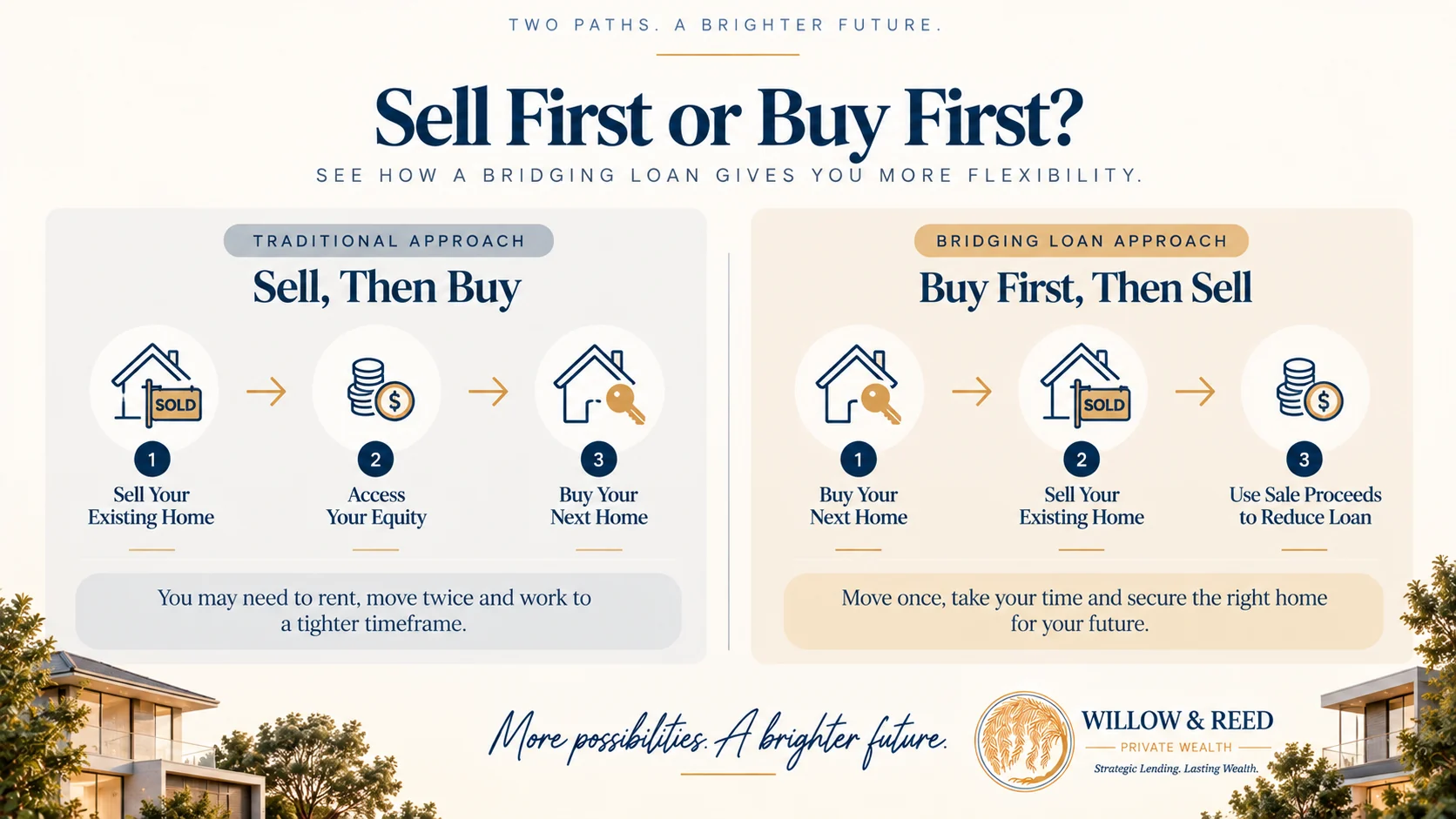
Closed and open bridging loans explained
There are two main types of bridging loan, and which one you’re offered depends largely on where you are in the selling process.
- Closed bridging loan. You already have a confirmed, unconditional sale on your current property, with a set settlement date. Because the lender has more certainty, this option usually comes with more favourable terms.
- Open bridging loan. Your current property hasn’t sold yet, or hasn’t been listed. This carries more risk for the lender, and generally results in higher interest rates or stricter lending criteria.
Understanding which category you fall into helps set realistic expectations before you approach a lender.
When bridging finance makes sense
Bridging loans tend to suit a fairly specific set of circumstances. They can be worth considering if you:
- Want to buy before you sell, to secure a property you don’t want to miss out on
- Need fast settlement, for example after buying at auction
- Want to avoid renting or moving twice between properties
- Are a professional or family upgrading or relocating
- Have strong equity in your current home and a stable income
If you’re buying at auction and considering bridging finance to make it work, our guide on how to bid at an auction is worth reading alongside this one.
The pros and cons of bridging finance
Like any lending product, bridging finance is a trade-off, and it’s worth weighing both sides honestly before you commit.
The advantages:
- You can buy your next home without selling first
- You avoid rushed decisions or a poorly timed, discounted sale
- You can present your current home properly to get the best possible price
- You stay in control of your own timeline, rather than the market’s
The trade-offs:
- You carry two debts at once, temporarily
- Interest rates are often somewhat higher than a standard mortgage
- The structure is more complex than a straightforward home loan
- Valuations and lending conditions tend to be stricter
Is a bridging loan right for you?
Bridging loans generally suit buyers in a strong financial position, particularly those with meaningful equity in their current home and a comfortable income to cover the bridging period. If your equity is thin, or your income is already stretched, a bridging loan can add pressure rather than relieve it.
If you’re a busy professional or a family planning your next move, I can help assess whether bridging finance suits your situation, working across a wide panel of lenders to find a structure that matches your goals. To see how this plays out in a real transaction, our bridging loan case study from Hawthorn, Victoria walks through an actual client outcome.
What a bridging loan typically costs
Beyond the interest rate, it’s worth budgeting for the practical costs that come with a bridging loan. Most lenders charge an establishment or application fee, and because two properties are usually involved, you can expect valuation fees on both your existing home and the property you’re buying, rather than just one.
Some lenders also charge a somewhat higher variable rate on the bridging component compared with their standard home loan rate, reflecting the shorter term and added complexity. None of these costs should come as a surprise if you compare a few lenders and ask for a full breakdown before you commit, which is exactly the kind of comparison I do for clients considering bridging finance.
Alternatives worth considering first
A bridging loan isn’t the only way to manage buying and selling at the same time. Depending on your situation, it’s worth also considering a longer or extended settlement negotiated directly with the seller, a subject to sale clause on your offer, or simply selling first and negotiating a rent back arrangement so you’re not moving twice.
Each of these has its own trade-offs, and none of them suit every situation, which is exactly why it’s worth talking through your specific timeline and equity position before deciding which path makes sense.
Frequently asked questions
What is peak debt in a bridging loan?
Peak debt is the total amount you owe at the point where you temporarily own both your old and new property, before your existing home sells. It includes your existing mortgage, the new purchase price and associated costs.
What’s the difference between an open and closed bridging loan?
A closed bridging loan applies when you already have a confirmed, unconditional sale on your current property, which usually means more favourable terms. An open bridging loan applies when your current property hasn’t sold yet, which carries more risk and often means higher rates or stricter criteria.
How long does a bridging loan usually last?
Bridging loans are designed to be short-term, generally covering the period between settling on your new property and settling the sale of your existing one, which can range from a few weeks to several months depending on how quickly your current home sells.
Are bridging loan interest rates higher than a standard home loan?
Often, yes, particularly for open bridging loans where your current property hasn’t sold. Closed bridging loans, with a confirmed sale date, typically attract more competitive terms.
Can I use a bridging loan to buy at auction?
Yes, bridging finance can work well if you need to move quickly after winning at auction, provided your finance and equity position are assessed and approved before auction day rather than after.