

Bidding at auction means you’re legally bound to buy the moment the hammer falls and the highest bid is accepted, with no cooling-off period and a 10% deposit due on the spot. That means the real work happens before auction day, with your finance approved, the contract reviewed, and a maximum price firmly set in your head.
I’m Durand, and I help professionals and families get their finance sorted so auction day is about strategy, not stress. Here’s my step-by-step guide to bidding with confidence.
1. Do your homework early
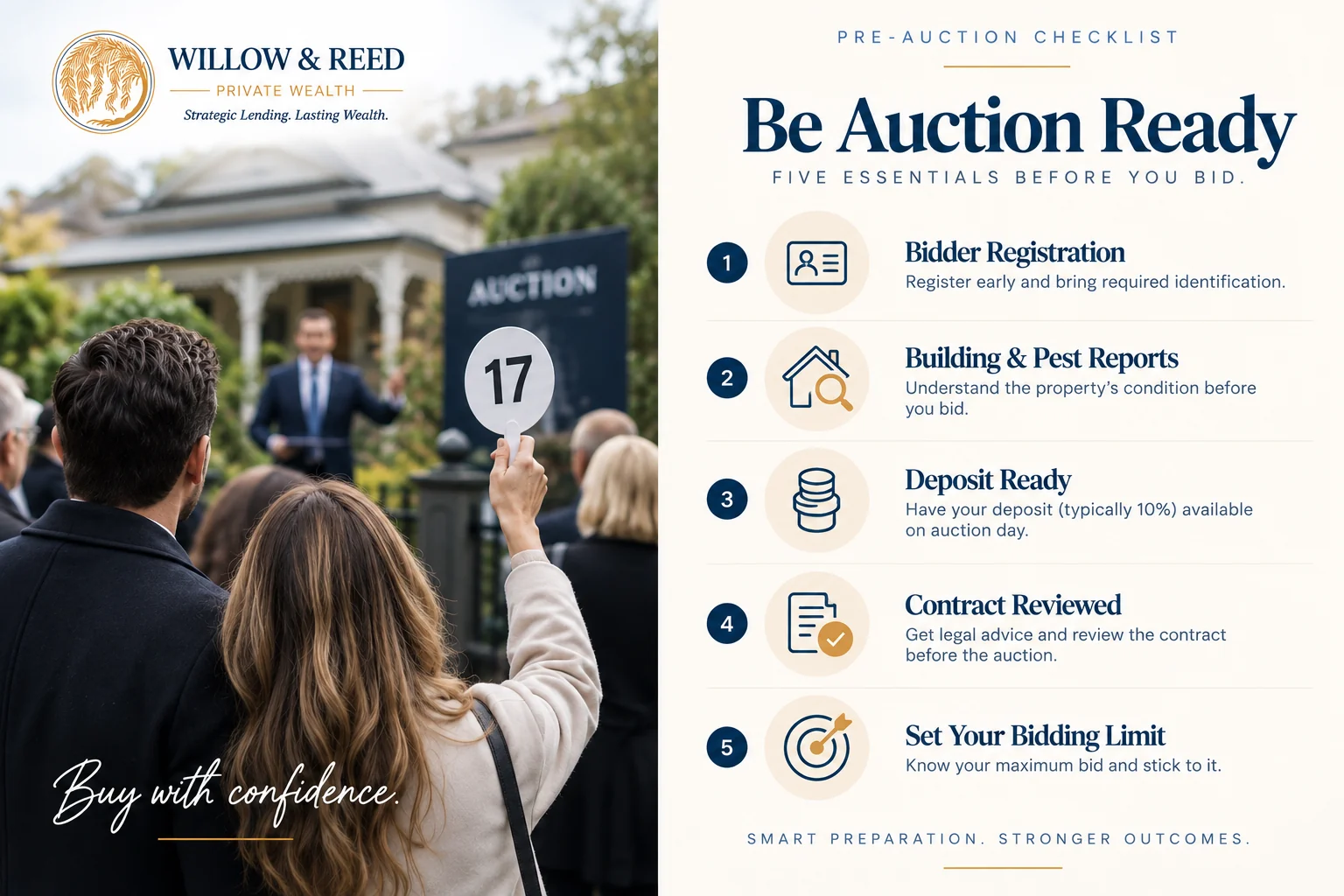
Preparation is what separates a confident bidder from a nervous one. Before auction day, make sure you’ve inspected the property, ideally more than once, and had the contract of sale reviewed by a solicitor or conveyancer. Arrange a building and pest inspection, and research recent sales of comparable properties in the area so you have a realistic sense of value.
The more informed you are, the more confident you’ll feel standing in the crowd on the day.
2. Get your finance ready before auction day
Auctions move fast, and there’s no cooling-off period. If you’re the winning bidder, you’re legally bound to the purchase, and you’ll need to pay a 10% deposit on the spot.
Before you register to bid, make sure you have formal pre-approval in place, you know your maximum borrowing limit, and your deposit is accessible, typically as a bank cheque or an EFT payment ready to go. As a mortgage broker, this is where I help most, securing pre-approval and tailoring your finance so you know your real number well before you raise your hand, particularly if you’re also selling a property or managing more complex finances.
3. Understand the rules of the game
Auction laws vary slightly between Australian states and territories, but most share the same basics. You need to register to bid before the auction starts, usually by showing photo identification to the agent, the property is sold as is, and there’s no renegotiating terms after the hammer falls.
Ask the selling agent for the auction rules and a copy of the contract of sale well in advance, so there are no surprises about deposit amounts, settlement terms or special conditions on the day. If anything in the contract is unclear, get your solicitor or conveyancer to explain it before auction day, not after you’ve already bid.
4. Attend a few auctions before you bid
If you haven’t bid at auction before, it’s worth attending a few as an observer first. Watch how the auctioneer runs the process, how other bidders behave, and get a feel for the pace and psychology of the room.
This real world experience makes a genuine difference to how calm and clear headed you’ll feel when it’s your turn to bid.
5. Plan your bidding strategy
A clear plan keeps you focused when the pressure is on. Before the auction, decide on a firm maximum price and commit to sticking to it, regardless of what happens in the room. Think about whether you’ll open with a strong, confident bid or hold back to read the room first, and aim to make clear, timely offers rather than hesitant ones.
Above all, try to stay emotionally detached from the outcome. If that’s difficult, engaging a buyer’s agent or a trusted representative to bid on your behalf is a perfectly reasonable option if you’d prefer a more hands-off approach.
6. What happens if you’re the highest bidder
If you’re the highest bidder and the property is declared sold, you’ll sign the contract of sale immediately, pay your 10% deposit on the spot, and proceed towards settlement, usually within 30 to 90 days depending on the terms negotiated in the contract.
There’s no cooling-off period once the hammer falls, which is exactly why the finance and legal preparation covered above matters so much before you even register to bid.
7. What happens if the property is passed in
If the property doesn’t reach its reserve price, it will be passed in. If you were the highest bidder at that point, you’ll often get the first opportunity to negotiate directly with the vendor, sometimes at or near your last bid.
This is a different negotiation to a pre-auction offer, since you already have a clear sense of where the market landed on the day, which can work in your favour if you stay calm and stick to the numbers you’ve already worked out.
Vendor bids and auctioneer tactics to expect
It helps to know that an auctioneer can place a small number of vendor bids on behalf of the seller, generally up to the reserve price, to help open or move the bidding along. These are usually announced as vendor bids under the auction rules in most states, so ask the agent about the local rules beforehand if you’re unsure.
Auctioneers may also use techniques like calling for a bid “in your own time” or pausing to build a sense of momentum in the room. None of this is a reason to move off your maximum price. Knowing these tactics exist ahead of time simply means you won’t mistake them for genuine competing interest and get drawn above your limit.
Common mistakes to avoid
The most common auction mistakes I see are avoidable. Bidding without finance approved, not reading the contract before the day, setting a maximum price and then abandoning it in the moment, and turning up to your very first auction as a bidder rather than an observer.
Each of these comes back to the same root cause, not enough preparation before the day. Fix that, and auction day becomes far less stressful, whether you’re buying a family home, upgrading your lifestyle, or adding to a property portfolio.
Frequently asked questions
Do I need pre-approval before bidding at auction?
Yes, ideally. Because there’s no cooling-off period on an auction purchase and you’re legally bound the moment the hammer falls, having formal pre-approval in place before you register to bid means you know your real maximum price.
How much deposit do I need to pay if I win at auction?
You’ll typically need to pay a 10% deposit on the spot as the winning bidder, so it’s important to have this accessible, usually via bank cheque or EFT, before auction day.
Can I negotiate after an auction if the property is passed in?
Often, yes. If the property doesn’t reach its reserve and is passed in, the highest bidder usually gets the first opportunity to negotiate directly with the vendor.
Is there a cooling-off period on auction purchases?
No. Once the hammer falls and you’re the successful bidder, you’re legally bound to the purchase, which is why finance and legal preparation need to happen before the auction, not after.
Should I bid myself or use a buyer’s agent?
Either can work. Bidding yourself is fine if you’re comfortable staying disciplined under pressure, but engaging a buyer’s agent or a trusted representative is a reasonable option if you’d prefer a more hands-off approach or find it hard to stay emotionally detached.