
Refinancing makes sense when a lower rate, better features, or an improved equity position will genuinely save you money or help you reach a goal faster than staying put. It rarely makes sense purely because rates have moved, without looking at your own situation first.
Before you refinance, it helps to think about three things: why you want to do it, whether your current lender is still the right fit, and whether your own circumstances have changed since you took out the loan.
The three things worth reviewing before you refinance
Start with the purpose. Are you refinancing to reduce your repayments, access equity, consolidate debt, or shorten your loan term? Being clear on the goal shapes which loan structure actually makes sense.
Next, look at your lender. Are you happy with the service, the rate and the features on offer, or have you simply never checked what else is available?
Finally, look at yourself. Has your income changed, has your family situation changed, or have your expenses shifted since you last reviewed your loan? Any of these can shift what the right loan looks like for you now.
When refinancing might not be the right move
- You are refinancing into a new, longer term late in your existing loan. Most loans shift from being interest heavy to principal heavy around the halfway point, roughly year 15 of a 30 year loan. Resetting the clock late in your loan can undo that progress and increase the total interest you pay.
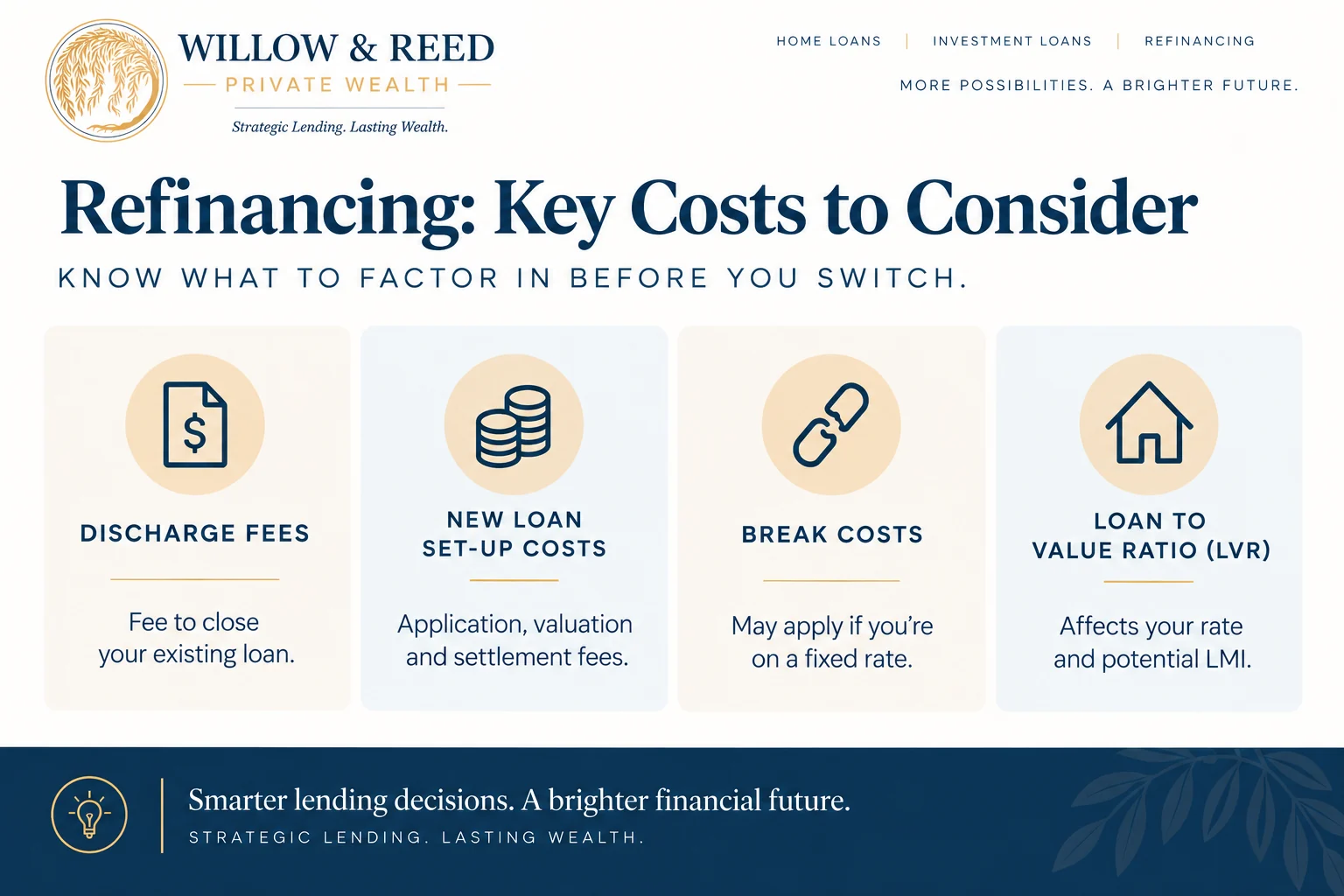
- You plan to move within the next few years. Entry and exit costs can take several years to recover through interest savings, so refinancing shortly before a planned sale rarely pays off.
- You want to fund a lifestyle purchase. Using your home as security to fund a car, holiday, or other depreciating asset adds risk to your home without adding lasting value.
- Your income has dropped or your credit file has been affected. Refinancing will not fix an underlying budget problem, and you may find it harder to get approved. Addressing your budget directly is usually the better first step.
- You are on a fixed rate loan, early in the fixed term. Breaking a fixed rate loan early, for example only a couple of months into a two year fixed term, rarely makes financial sense once break costs are factored in.
When refinancing could make sense
- Your property value has increased. If your loan to value ratio has fallen below 80 percent, you may qualify for a better rate, or be able to access some of that equity for a renovation or an investment deposit.
- You can secure a more competitive interest rate. A lower rate reduces your repayments and helps you build equity faster, particularly if you keep your repayments at their previous level and direct the difference towards your principal.
- You want to consolidate higher interest debt. Rolling credit card or personal loan debt into your mortgage can reduce your overall interest cost, provided you pair it with real budgeting discipline so the debt does not build back up.
- You want to use equity to buy an investment property. Refinancing can free up equity for an investment deposit, while keeping your existing loan at around 80 percent LVR and using a 20 percent deposit on the new purchase, to avoid Lenders Mortgage Insurance on either loan.
How often should you review your home loan
As a general guide, I recommend reviewing your home loan every two to three years, comparing both the broader market and what your current lender is prepared to offer you. Rates, fees and features all move over time, and a loan that suited you a few years ago may no longer be the best fit.
If you are weighing up a refinance against buying an investment property or restructuring existing debt, it is worth reading my articles on buying your first investment property and debt recycling as well.
Why work with a mortgage broker when you refinance
A mortgage broker can compare your current loan against a genuinely wide panel of lenders, rather than the handful of products a single bank can offer you. If you are weighing up whether to refinance direct with your bank or through a broker, I have covered the difference in why seeing a mortgage broker is better than going direct to the bank.
Frequently asked questions
How do I know if refinancing is worth it?
Start by being clear on your purpose, whether that is a lower rate, access to equity, or consolidating debt, then compare that against your current lender and any exit or entry costs involved. If the numbers still work in your favour after those costs, it is worth pursuing.
Is it a bad idea to refinance if I am planning to move soon?
Generally yes. Entry and exit fees can take several years to recover through interest savings, so refinancing shortly before you plan to sell often does not pay off.
Can refinancing help me buy an investment property?
Yes. If you have enough equity, refinancing can free up funds for an investment deposit, typically while keeping your existing loan at around 80 percent LVR and putting down a 20 percent deposit on the new purchase, to avoid Lenders Mortgage Insurance.
Should I break my fixed rate loan to refinance?
Usually not, especially early in the fixed term. Break costs on a fixed rate loan can outweigh any savings from refinancing, unless you are very close to the end of the fixed period.
How often should I review my home loan?
I generally recommend a review every two to three years, checking both the wider market and what your current lender is willing to offer, to make sure your rate, fees and features are still competitive.