

Buying an investment property can build real wealth through capital growth and rental income, but only if you go in with a clear plan and honest numbers, not just enthusiasm. Before you sign anything, work out why you’re investing, what type of property fits that goal, and whether your finances can genuinely support it through the ups and downs.
I say this to every client considering their first investment property: it’s one of the most rewarding financial decisions you can make, but it deserves the same careful thinking as any long-term commitment, not a rushed decision based on what a friend or colleague just did.
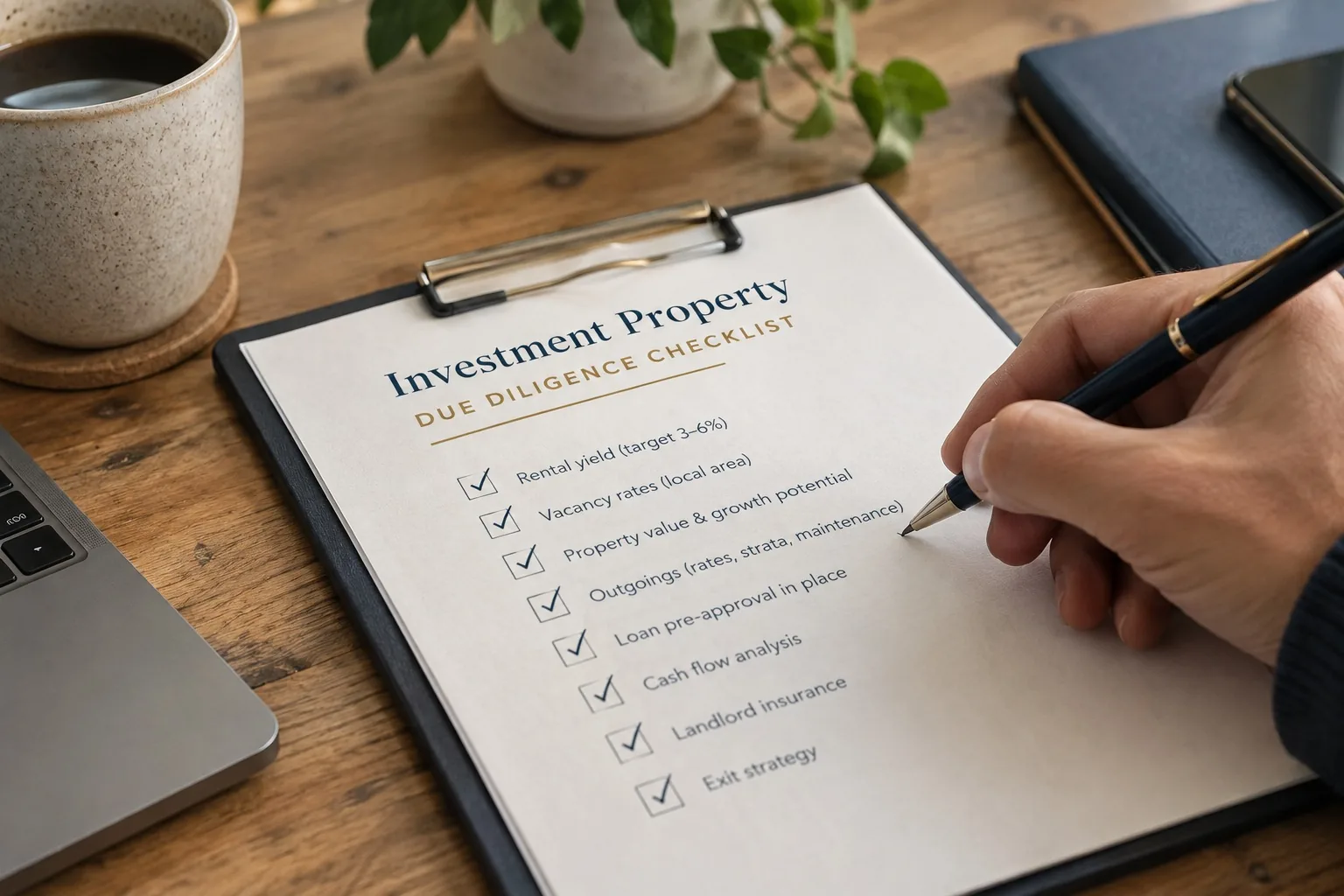
Understand why you’re investing before anything else
The key to property investing is understanding your ‘why’. Are you after capital growth, rental income, or both? Your answer shapes everything that follows, from the type of property you buy to the suburb you target.
Once you know your why, work out what type of property fits it, a house or an apartment, a particular suburb, or a property with development potential. Ask these questions before you start searching, not after. Going in without a clear brief leads to information overload, and often to a property that doesn’t actually achieve what you set out to do. If tax benefits are part of your thinking, speak with a financial adviser about your specific position, since this varies from person to person.
Treat it as a long-term commitment, not a quick win
An investment property is not a short-term play. It deserves the same careful consideration as any major long-term decision. Even when timed and researched well, property investing can turn a strong profit, but you still need to think through the impact on your after-tax cash flow and your standard of living along the way.
Be honest with yourself about whether the cash flow an investment property produces would significantly affect your everyday living expenses, or bring your serviceability across all your debts into question. The risk isn’t hypothetical, in a worst case an over-extended investment property can put your family home at risk too, if you can’t service the combined loans.
Check you’re genuinely financially ready
This might be the most important question of all: are you financially ready for this level of commitment? Don’t assume the rental income is guaranteed, or that it will always cover your costs.
- How will you service the loan if the property sits vacant for an extended period?
- What happens to your budget if you need to reduce the rent to secure a tenant?
- How would you fund a shortfall between rental income and your loan repayments?
These questions matter even more if you’re using your family home as security for the investment loan. Work through them honestly before you commit, ideally with a mortgage broker who can stress-test your numbers against a range of scenarios, not just the best case.
The upside, when it’s done properly
None of this is meant to scare you off buying an investment property. Quite the opposite. Done well, it can be one of the most rewarding financial decisions you make, and a genuine driver of long-term wealth. The difference between a good outcome and a stressful one usually comes down to preparation, understanding your numbers, choosing the right property for your goal, and structuring the loan properly from day one.
This is exactly where the right lending structure matters. Many first-time investors default to whatever loan structure their bank offers on their existing mortgage, without realising there may be a more efficient way to structure their debt to support future purchases. If you already have equity in your home, it’s worth understanding how a strategy like debt recycling works before you assume you need a large cash deposit to get started. If you’re weighing up buying an investment property while you’re still renting or before you’ve bought your own home, my guide to buying a house covers the fundamentals of borrowing capacity and deposits that apply either way.
Getting the loan structure right from the start
How you structure the loan on your first investment property affects your cash flow, your tax position and your ability to buy again down the track. This is where a mortgage broker earns their place in your team, alongside your accountant and financial adviser.
Questions worth working through before you apply include whether to use an offset account or a redraw facility, whether interest-only or principal and interest repayments suit your strategy, and how the loan should be structured if you plan to build a portfolio rather than stop at one property. If you’re not sure which structure fits your plans, my article on offset accounts versus redraw facilities is a good place to start.
Frequently asked questions
What should I consider before buying my first investment property?
Start with your why, whether that’s capital growth, rental income or both, then work out what type of property and location fits that goal. Just as importantly, be honest about whether you can service the loan comfortably, including during a vacancy or a period of reduced rent.
Is rental income guaranteed to cover my loan repayments?
No. Rental income can fluctuate, and your property could sit vacant for a period. Before you commit, work out how you’d cover the loan repayments if the rent stopped or dropped, without relying on the rental income being guaranteed.
Can buying an investment property put my family home at risk?
It can, particularly if your family home is used as security for the investment loan and your finances become overextended. This is why serviceability across all your debts needs to be assessed honestly before you commit, not just the numbers on the investment property itself.
Should I buy a house or an apartment as my first investment property?
It depends on your goals. Houses often suit investors focused on land value and capital growth, while apartments can offer stronger rental yields in some locations. The right choice comes back to the ‘why’ behind your investment, which is the first thing to work out.
Do I need a large cash deposit to buy my first investment property?
Not necessarily. If you already own a home with equity in it, there may be more efficient ways to structure your finance, such as using that equity, rather than saving a large cash deposit from scratch. It’s worth discussing your specific position before assuming you know your options.